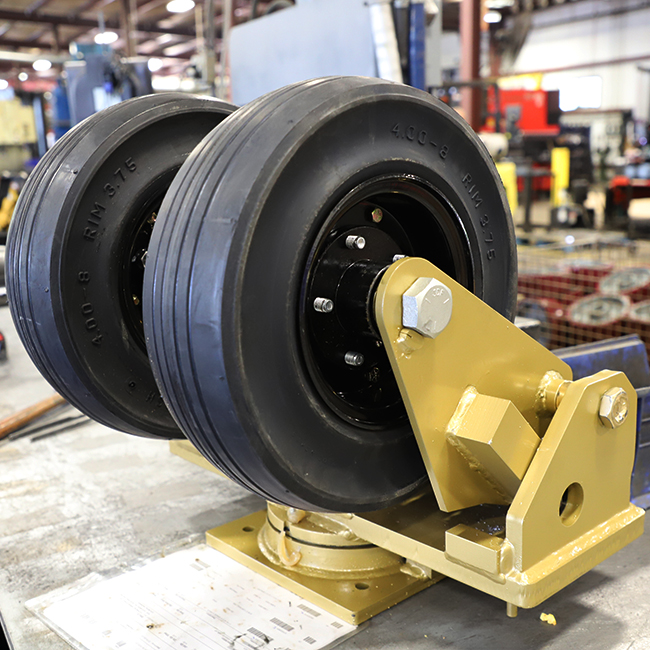

Choosing suitable heavy duty casters for extreme loads outdoor is a complex decision-making process. It involves a solid understanding of several variables, like load capacity, wheel material, and environmental conditions. Considering these technical details, here is an all-inclusive guide to selecting the most suitable casters that cover everything from load weight to terrain type and discuss how they influence the performance of a caster.
Note that moving extreme loads outdoors is no easy feat. A recent survey found that about 60% of workplace accidents involving material handling are caused by improper equipment selection and use, including casters. When navigating outdoor conditions with heavy loads, the stakes are even higher. Uneven surfaces, temperature fluctuations, and exposure to various elements can introduce often-overlooked challenges and lead to significant safety hazards and operational inefficiencies.
Outdoor casters are wheel assemblies engineered to handle conditions that destroy standard casters, including:
Uneven surfaces
Temperature swings
Moisture and corrosion
Dirt, gravel, and debris
High shock and vibration loads
They are commonly used in shipyards, construction zones, aerospace ground support, industrial yards, and heavy manufacturing environments where loads must move outside without failure.
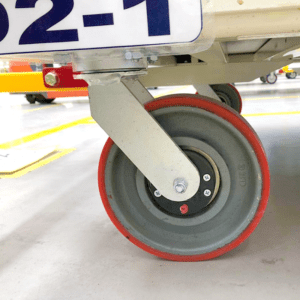 Casters are specialized wheel assemblies attached to the bottom of objects to enable mobility. They come in various types, each tailored for specific purposes. The two primary types are swivel and rigid casters. Swivel casters can rotate 360 degrees and provide multi-directional movement, making them highly maneuverable. Rigid casters only move in a straight line and are suitable for long, straight paths.
Caster modifications include a braking mechanism to lock the wheel in place and pneumatic casters, which use air-filled tires to absorb shock and handle uneven surfaces. The caster type chosen typically depends on the load capacity required, the kind of surface it will be used on, and the specific mobility needs of the object or equipment.
Outdoor Casters for extreme loads and outdoor environments allow for easy and efficient transportation of objects within various settings, including but not limited to manufacturing plants and warehouses. In particular, heavy-duty casters help support substantial weight, which is indispensable for material handling equipment. They are available in various styles, materials, and functionalities to meet application requirements.
The best heavy duty outdoor casters differentiate themselves from standard heavy duty casters. High-performance outdoor casters often include:
Thicker fork legs
Reinforced swivel sections
Heavy-duty steel top plates
Stronger bearing systems
Robust mounting hardware
Many are designed to handle loads ranging from 2,000 lbs to 50,000 lbs depending on configuration and wheel design.
Depending on needs, some heavy duty casters are intended to absorb forces when moving at higher speeds, exceeding the standard walking speed. They find their applications in diverse fields, such as the aerospace industry, for moving large workpieces, assemblies, and equipment, including aircraft engine stands and tow bars.
Container casters, a variant of heavy-duty casters, help mobilize loaded or unloaded shipping containers. Moreover, heavy duty casters have altered the manufacturing plants producing heavy machinery and enabled easy and safe movement of heavy parts and assemblies. Dollies and platform trucks, essential material-handling equipment, rely profoundly on these casters.
Now, let’s discuss the factors to consider when choosing heavy-duty casters for outdoor applications.
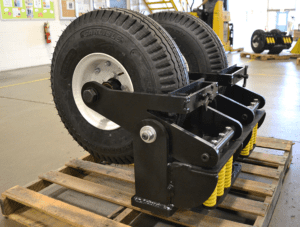 The appropriate wheel grip is essential when selecting casters for extreme outdoor loads. One might consider pneumatic or solid pneumatic wheels to ensure optimal grip, particularly on outdoor surfaces. These types of wheels feature a vigorous design that allows for excellent shock absorption and an ability to navigate over uneven surfaces smoothly.
Tread Pattern Matters Too. Wheel tread impacts traction dramatically:
Ribbed tread = better straight-line stability
Knobby tread = stronger grip on loose gravel or dirt
If your load is moving across uneven terrain, traction isn’t optional. It’s control.
Given the variability of outdoor surfaces, terrain uniformity is critical to consider. Uneven terrains require specific caster designs to maintain stability and smooth operation:
Weather conditions can greatly impact the performance of casters. Factors like temperature, humidity, and exposure to elements such as water, ice, or salt can degrade the material and performance of casters over time. Therefore, selecting wheel materials and coatings that can resist these environmental factors is essential. Consider:
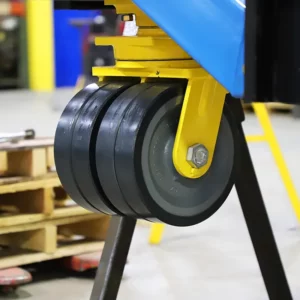 When choosing casters for extreme loads, understanding the total load capacity of your caster assembly is critical. It includes the weight of the object being moved and the importance of the trolley or device to which the casters are attached. Note that the load capacity of a caster is not simply the sum of its wheel capacities.
Factors such as:
Number of wheels
Wheel size
Caster configuration (fixed vs. swivel)
These are all critical factors in determining the total load capacity. For instance, dual-wheel casters can double the load capacity compared to single-wheel configurations and offer a lower overall height.
The swivel or turning radius refers to the space a caster requires to pivot or turn. A larger swivel radius is often preferred for heavy-duty casters outside because they require less force to change direction.
A larger swivel radius often means:
Easier turning under heavy load
Less push force required
Smoother maneuverability
But it also requires more clearance space. For example, casters with a larger swivel radius would provide easier maneuverability in a shipyard, where large and bulky loads must be moved.
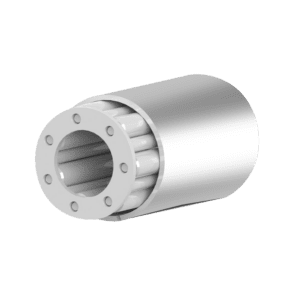
Straight Roller Bearing
Bearings determine how smoothly the wheel rolls — and how long it survives.
Roller Bearings
Roller bearings are often the better choice for extreme loads because they are:
Robust
Durable
Designed for heavy load transfer
Less prone to failure under outdoor abuse
Ball Bearings
Ball bearings roll and swivel smoothly, but they’re not always the best option for extreme outdoor weight and debris-heavy conditions.
If the load is brutal, bearing selection matters as much as wheel material.
Lastly, maneuvering the load effectively is essential, especially in constrained outdoor environments.
The safety of personnel and equipment is paramount when choosing casters for extreme loads. To ensure safety, there are several guidelines to follow. As mentioned in the previous section, the casters’ weight capacity must exceed the load they will carry. For instance, if a load weighs 5000 lb, casters rated at 6000 lb or more should be used. Especially in outdoor conditions where the terrain may be uneven, there will be times when only three of the four wheels are in contact with the ground, and they must be able to support the load.
RELATED: How is weight capacity determined for casters?
Appropriate caster material should be selected considering the surface type. For example, more robust materials such as cast iron or forged steel are preferable for uneven outdoor surfaces. Additionally, larger caster wheels are recommended for heavier loads since they distribute weight more evenly, minimize wheel deformation, and enhance maneuverability.
Regular maintenance and performance checks also ensure the safety and longevity of casters for extreme loads. Systematic visual inspections are a simple yet effective preventative measure for signs of wear, such as cracked wheels, bent brackets, or loose bolts.
Perform routine tests to measure rolling resistance, swivel lead, and ease of movement. Remember, even the best heavy duty outdoor casters can falter under continuous heavy-duty use. Hence, maintaining a lubrication schedule is vital for bearings, as it reduces friction and prevents premature wear. Finally, the load distribution must be regularly checked and adjusted as needed to prevent tipping of the equipment. These steps can effectively manage the risk of casters for extreme loads.
RELATED: Caster Maintenance and Care.
As experts in heavy-duty casters, we provide a broad selection suitable for various applications and extreme conditions. Please visit our homepage for more information, and feel free to contact us for professional advice.